


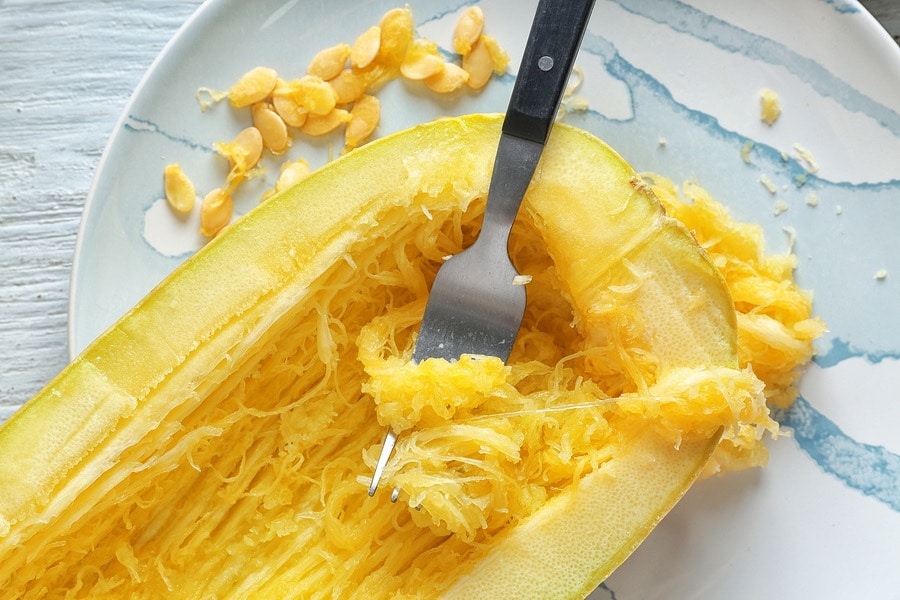
If you’ve ever wondered how to turn spaghetti squash into perfect noodle-like strands, you’re in the right place!
You can watch the quick video, scroll through the step-by-step photos, or grab the printable recipe card at the bottom—whichever way you like to learn.
Spaghetti squash is a type of winter squash that becomes long, noodle-like strands when cooked. These veggie “noodles” are naturally gluten-free, lower in carbs than pasta, and high in fiber, calcium, and potassium. When roasted correctly, they’re tender, slightly sweet, and make the perfect base for your favorite sauces.
Why Use Spaghetti Squash Instead of Pasta?
- Naturally gluten-free: An easy swap for anyone avoiding wheat.
- Low in calories & carbs: A lighter choice that still satisfies.
- Nutrient-dense: Provides fiber, vitamin A, vitamin C, potassium, and antioxidants.
- Versatile: Works with marinara, pesto, butter, or any sauce you love.
It’s also a fun way to get more vegetables on your plate—especially if you’re cooking for picky eaters.
Why Use Spaghetti Squash Instead of Pasta?
- Naturally gluten-free: An easy swap for anyone avoiding wheat.
- Low in calories & carbs: A lighter choice that still satisfies.
- Nutrient-dense: Provides fiber, vitamin A, vitamin C, potassium, and antioxidants.
- Versatile: Works with meat sauce, marinara, pesto, butter, or any sauce you love.
Spaghetti squash makes a great side dish on its own, and we love to use it as the base of an easy 30-Minute Weeknight Bolognese Sauce.
How to Cook Spaghetti Squash Noodles
Step 1: Preheat the Oven to 400°F (204° C)
Heat your oven to 400°F (204°C). Line a rimmed baking sheet with parchment paper or a silicone baking mat for easy cleanup.
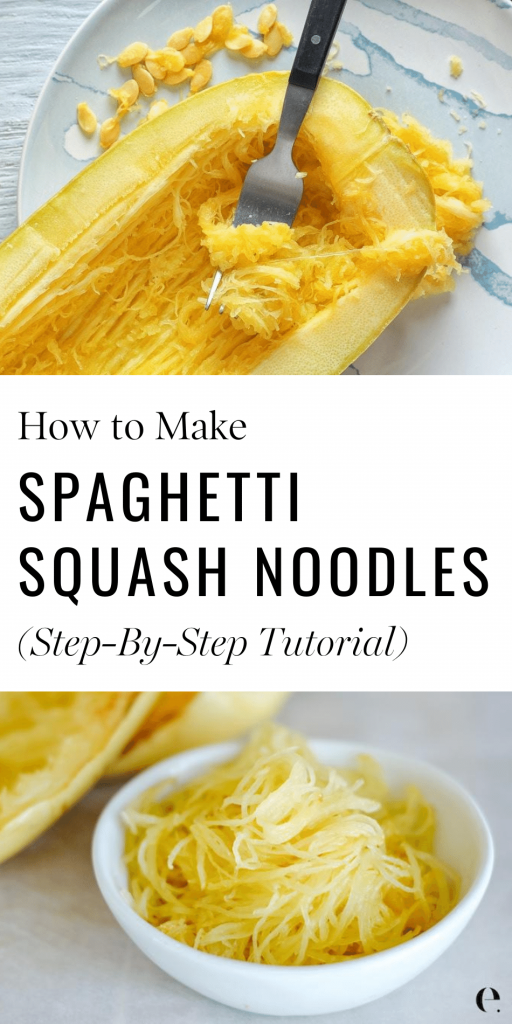
Step 2: Slice an Inch Off the Top and Bottom of the Spaghetti Squash, Then Slice Down the Middle
Cut about 1 inch off both ends of the squash (the stem end and bottom). Then, using a large, sharp knife, carefully slice the squash lengthwise. Cutting can be the hardest part—go slowly and make sure the squash is stable.
Remember to use the biggest knife you have and proceed slowly. It may take a few minutes, but prioritizing safety is always better than risking an accident.
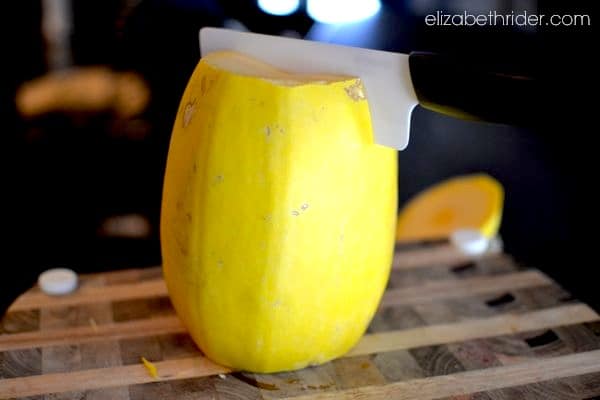
Step 3: Using a Spoon, Scrape Out All of the Seeds and Flesh
Use a spoon to scrape out the seeds and stringy bits. (Save the seeds if you’d like to roast them later for a snack—similar to pumpkin seeds.)
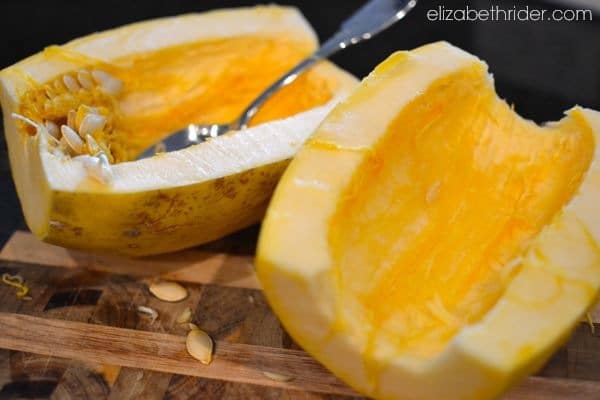
Step 4: Brush the Inside of the Squash with Olive Oil
Brush the cut side of the squash halves with a little olive oil. Place them cut side down on your prepared baking sheet.
Pro tip: In arid climates, you can add one or more tablespoons to the baking sheet if needed to retain moisture. I typically don’t do this because I find it can make the noodles too wet, but in a very dry climate, this might help.
Step 5: Roast the Spaghetti Squash for 30-40 Minutes Until the Flesh is Fork-Tender
Bake for 30–40 minutes, until the flesh is fork-tender. The outside will still be firm, but the inside should easily shred into strands.
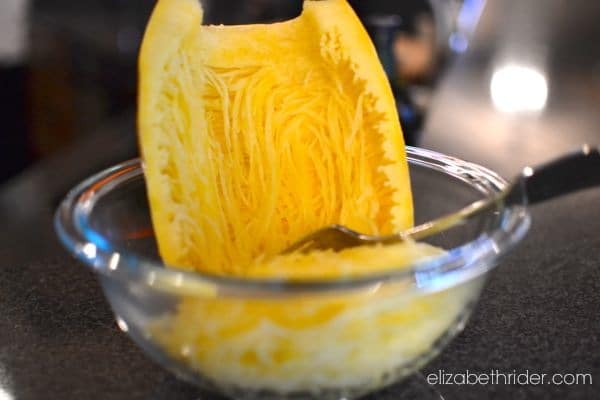
Step 6: Let it Cool, Then Scrape Out Your Spaghetti Squash Noodles
Let the squash cool for at least 10–15 minutes. Use a fork to scrape the inside lengthwise—you’ll see noodle-like strands form.
That’s it! Fresh, golden spaghetti squash noodles ready to serve.
Spaghetti Squash Recipes:
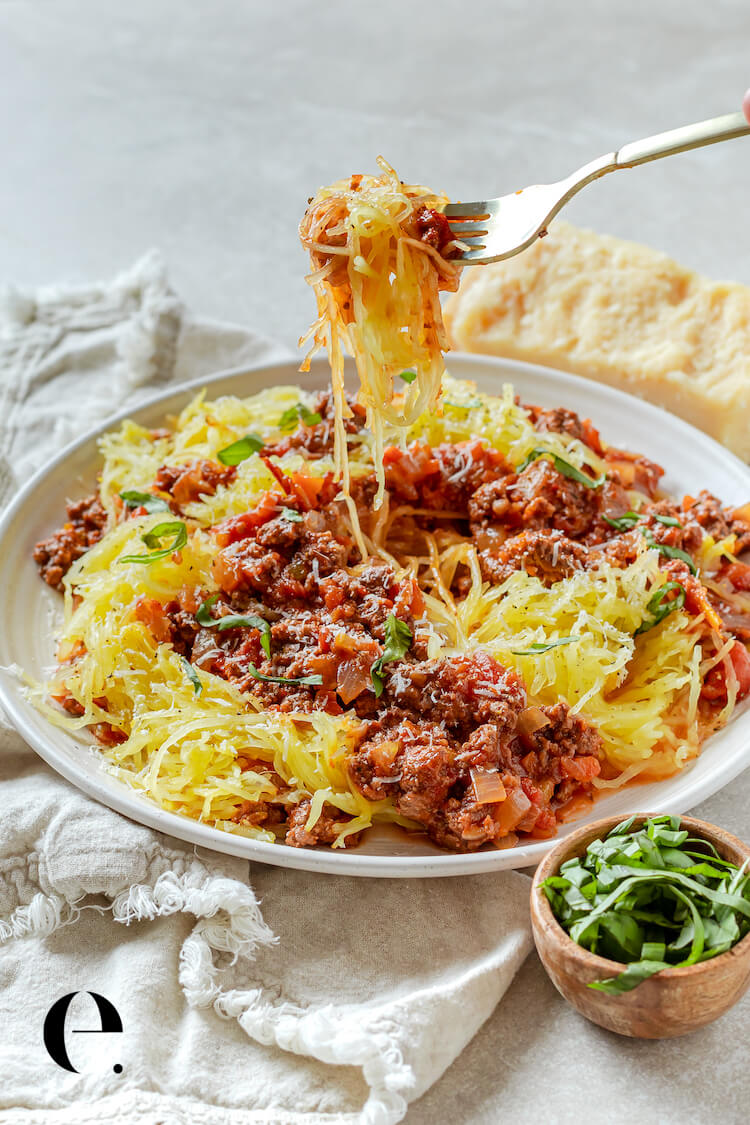
- Spaghetti Squash Bolognese: Serve them with my Weeknight Bolognese—this is one of our favorite weeknight meals!
- Spaghetti Squash Noodles with Pesto: another favorite, check out my Spaghetti Squash Noodles with Pesto video at the bottom of this post to see how
- Buttery Squash Noodles: toss your noodles with a little butter (or vegan butter) and salt & pepper—yum
- Choose your own adventure: you can put just about any sauce you like over spaghetti squash noodles, it’s that easy. You can also top these with a sprinkle of parmesan cheese like any regular pasta or add a dash of red pepper for a kick.
Storage Tips
Store cooked noodles in an airtight glass container in the fridge for up to 3 days. Reheat gently in a skillet over medium heat or in the microwave.
Print
Spaghetti Squash Noodles
- Prep Time: 10 mins
- Cook Time: 40 mins
- Total Time: 50 mins
- Yield: 8 servings
- Category: Side
- Method: Roast
- Cuisine: Healthy
Description
Spaghetti squash noodles are a simple, healthy pasta swap—naturally gluten-free, low-carb, and full of fiber and nutrients. When roasted, it transforms into tender strands that look like noodles. This method shows you how to bake, scrape, and serve them with any sauce you love.
We love it with our Weeknight Bolognese!
Ingredients
- 1 spaghetti squash
- 1–2 teaspoons extra virgin olive oil
- sea salt and pepper, to taste (optional)
Instructions
- Preheat oven to 400°F (204°C). Line a baking sheet with parchment paper for easy cleanup.
- Slice 1 inch off the top and bottom of the squash (at least the bottom for stability), then cut in half lengthwise with a large, sharp knife.
- Scoop out the seeds and stringy flesh. Discard, compost, or save seeds to roast like pumpkin seeds.
- Brush the cut sides with olive oil and place cut side down on the prepared baking sheet. For very dry climates, add 1–2 tablespoons of water to the pan.
- Roast 30–40 minutes, until the flesh is fork-tender.
- Let rest 15 minutes or until cool enough to handle.
- Use a fork to scrape out noodle-like strands.
- Toss with sauce (marinara, pesto, or simply olive oil, salt, and pepper). Serve warm.
Storage: Store in an airtight glass container in the refrigerator for up to 3 days.

Cheers!
Spaghetti Squash FAQ
Can I cook spaghetti squash in the microwave?
Yes! Pierce the squash whole with a fork several times, then microwave for 5–7 minutes to soften it. This makes cutting easier. Slice, remove seeds, then microwave the halves cut side down for 10–12 more minutes until tender.
Should I roast spaghetti squash whole or cut in half?
You can do either. Roasting squash halves cut side down gives the best texture and caramelization. Roasting the squash whole works too—it just takes longer and is trickier to scoop.
How do I know when the squash is done?
The flesh should be tender when pierced with a fork and easily pull into noodle-like strands.
Can I freeze spaghetti squash noodles?
Yes, but they tend to get watery when thawed. If freezing, press out excess moisture first, then store in freezer-safe bags for up to 2 months.
How much protein is in spaghetti squash?
Spaghetti squash is not a high-protein food (about 1g per cup). To make it a balanced meal, pair it with a protein source like chicken, beans, or ground turkey.


















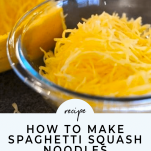
This spaghetti squash recipe makes the perfect healthy noodle substitute!.
thank you for this guidance it turned out really great!
Happy to hear it! 🙂 ~E
Haven’t tried the recipe. How long are the noodles? Do they really work? Can you twirl them? Thank you!
They’re not as “twirly” or long as regular noodles, but they’re a nice substitution.
Haven’t tried this yet, but I have a question. Do the noodles taste the same as regular noodles? And what is the texture like? I’m trying to find something that has the same taste and texture. Thank you!!
If you have already made the noodles, you can try cooking them more in the sauce to make them softer. Don’t overdo that because you don’t want a mushy texture.
Will be making the “noodles” and making a KUGEL with the squash instead of pasta. Why not??
Will it still work out if I roast the squash, allow it to cool completely and then scrape the noodles out? I’m trying to work this into a quick weeknight dinner where I can roast ahead of time.
Super Easy!!!!!!!
I made this tonight and OMG! It was super easy and I got a lot more out of 1 squash then the little overpriced frozen bag I used to buy. Thank you so much for this recipe. Amazing. Will make this weekly.
I have tried several different “pasta” noodles and this by far is the absolute best (if you can’t have the real thing)! I was skeptical because c’mon it’s a veggie, but I was so wrong!
Nichole, We love spaghetti squash noodles, too! Glad it worked well for you. ~E
Curious, how do I keep it from coming out crunchy? I ve been roasting it for well over an hour but it s still just really crunchy. I ve never worked with spaghetti squash before so I m wondering if that s just how it is, or if I m doing something wrong.
You may have used a very large squash that needs more cooking time or your oven temperature could be inaccurate. Use an oven thermometer to confirm you are baking at 400 degrees.
I made this and the noodles taste amazing alone. However, when I put them in spaghetti sauce they taste a little crunchy. How can I fix this?
Hi Tracey, hmmm, the spaghetti squash noodles will always have some “bite” to them, but they shouldn’t be crunchy. You may have not roasted it long enough before pulling out the noodles. Perhaps try to cook it longer next time until the middle of the squash is very soft. ~E
Can i make it using butternut squash?
Hi Barza, no, this can’t be done with butternut squash. Spaghetti squash has a specific texture for it. ~E
Great recipe Elizabeth the oven method is delicious found my substitute for noodles thank you!!
Is this good with spaghetti sauce?
Hi Paula! Yes, we love it with a good red sauce or any sauce for that matter. ~E
Thank you, I have been frustrated with the changes I have to make in our
diet.
Thanks so much. First time trying this. Doing the 21 day fix.
Awesome! Let me know how it turns out.
This made me cry! As pasta noodles are currently a no-no for me, so I searched for this. Thank you so much! 🙂 I will be doing this tomorrow as I am craving for some chicken pesto pasta. Do you think it’ll taste good? 🙂
I think that would be wonderful! Spaghetti squash noodles are delicious with just about anything.
At what temperature do you roast it?
Thank you so much. I am making this now. Squash is roasting. I’m trying to cut out grains. This was very well presented and easy to
follow.
Hi- can you make ahead and freeze?
I haven’t tried it, but if you try it just make sure to get as much air out of the package as possible. I would use a freezer gallon ziplock to try it.
Wonderful! I just gave up grains and was wondering how to do this. Perfect timing! Thank you for sharing
So glad it helps!
Great recipe Elizabeth, thank you. It is a lovely vegetable and that is a really nice way to cook it. Will try it this evening.
Great! Let us know how it turned out.