


If you’ve ever wondered if natural sweeteners are better for you than other forms of sugar, the answer is yes.
I prefer natural sweeteners to refined sugar because they’re less processed and can contain small amounts of vitamins, minerals, and antioxidants. But, just like processed sugar, natural sweeteners count as added sugar on food labels (FDA), so they should still be consumed in moderation.
When it comes to natural sweeteners, some are better than others
Sugar is a hot nutrition topic, and because of strong political lobbies, there is a bunch of information (and misinformation) swirling around the blogosphere.
Your sweet tooth exists for good reason. Mother’s breast milk is naturally sweet and is something that the baby should want. That inclination for sweets also made early humans search for sweet fruits and veggies, which supplied essential nutrients and good amounts of carbohydrates to lend enough energy to survive.
Natural sugar in small doses is not harmful. Imagine eating a handful of blueberries or a ripe tomato. The natural hydration, vitamins, minerals, and antioxidants all do your body good while giving you a boost of natural energy.
Now, think about pouring two cups of white sugar into a cookie dough mixture or drowning out your coffee with Coffee mate. These overloads of highly processed sugar harm your health. Sugar in overly processed, high quantities wreaks havoc on your body.
Natural sweeteners are sugar sources that haven’t been stripped of all of the nutrition in the refining process.
The less refined the better so they still contain vitamins, minerals, and antioxidants, and in some cases fiber.
Even natural sweeteners should still be consumed in moderation as they are still sugar, however, they’re better than the nasty chemical and highly-processed alternatives. Stick to these natural sweeteners and forgo the white processed stuff, you’re sweet enough already 😉
Note: Whole fruits blended up also make wonderful sweeteners for many dishes, too. For example, add a few pieces of fresh blended pineapple or apple to a sauce to add sweetness. The list below is specifically focused on sweeteners that are not whole fruits and veggies.
The 5 Best Natural Sweeteners
In no particular order…
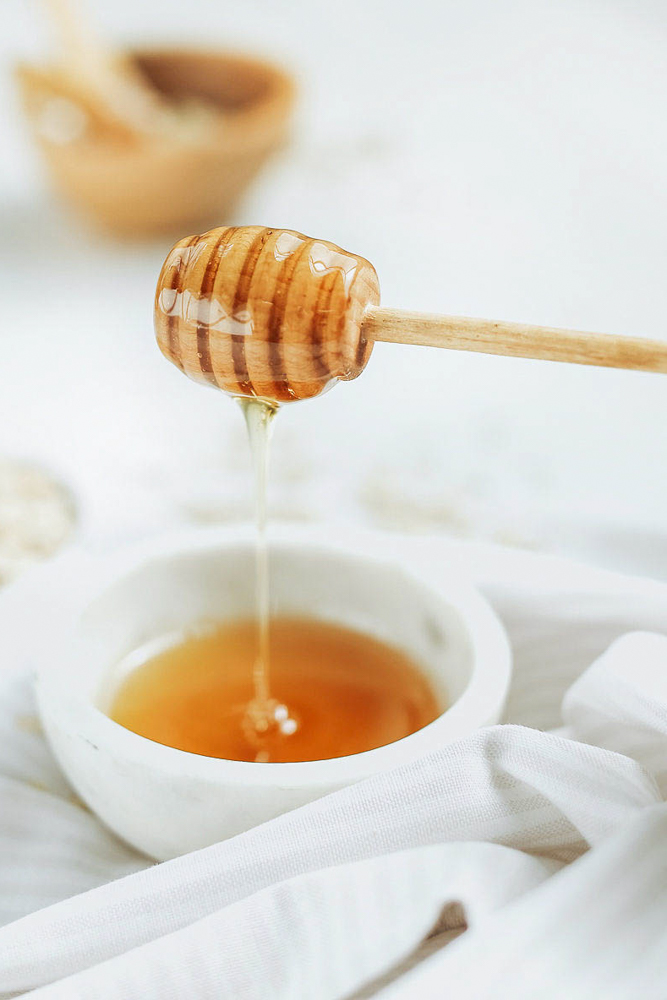
1. Raw Honey
One of the oldest natural sweeteners, honey is sweeter than sugar.
Depending on the plant source, honey can have a range of flavors, from dark and strongly flavored, to light and mildly flavored. Raw honey contains amounts of enzymes, minerals, and vitamins, so it’s important to look for raw on the label because the heat used in pasteurization can reduce some of those enzymes. You may have heard that local honey can help with seasonal allergies, but there isn’t good research to back that up yet. I still love supporting local beekeepers. If you can’t find local that’s ok, just look for raw.
One important note: never give honey to babies under 1 year old. It can cause infant botulism, according to the CDC.
Ways to use honey as a natural sweetener:
- Use 1/2 teaspoon to sweeten coffee or tea
- Enjoy 1/2 teaspoon raw, local honey or Manuka honey on its own
- Drizzle on homemade coconut yogurt or Greek yogurt if you tolerate dairy
- Try it in just about any recipe that needs sweetness
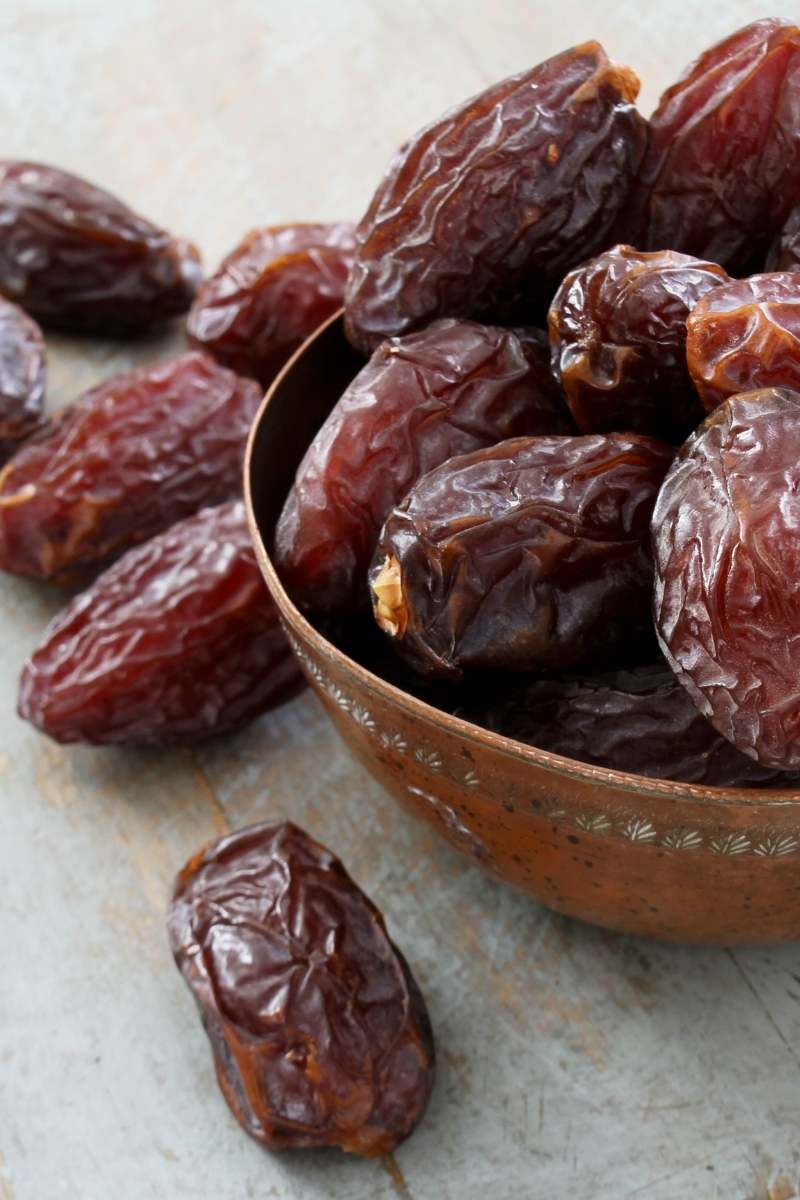
2. Dates & Date Paste
Whole pitted dates and date paste made from blending soaked dates with water both also make great sweeteners.
To soften dates, soak them overnight at room temperature, or for 15 minutes in warm water. Click here to learn how to make date paste. I like the Medjool variety of dates.
How to use Dates as a Natural Sweetener
- Blend a pitted date into a smoothie for natural sweetness
- Use date paste to make healthy vegan caramel
3. Real Maple Syrup
Maple syrup is made from boiled-down maple tree sap and contains minerals like manganese and zinc.
Approximately 40 gallons of sap are needed to make one gallon of maple syrup. Maple syrup has a much lower fructose content than agave. It adds a pleasant flavor to foods and is great for baking. Be sure to buy 100% pure maple syrup and not maple-flavored corn syrup. Most pancake syrup is just corn syrup with maple flavoring, so read the ingredient label every time.
Ideas to use Real Maple Syrup
- One of our favorites, we use maple syrup in many recipes – see them here
- We especially love using maple syrup as a natural sweetener on 2-ingredient egg & banana pancakes
- Real maple syrup is my go-to choice to sweeten up my healthy homemade coffee creamer
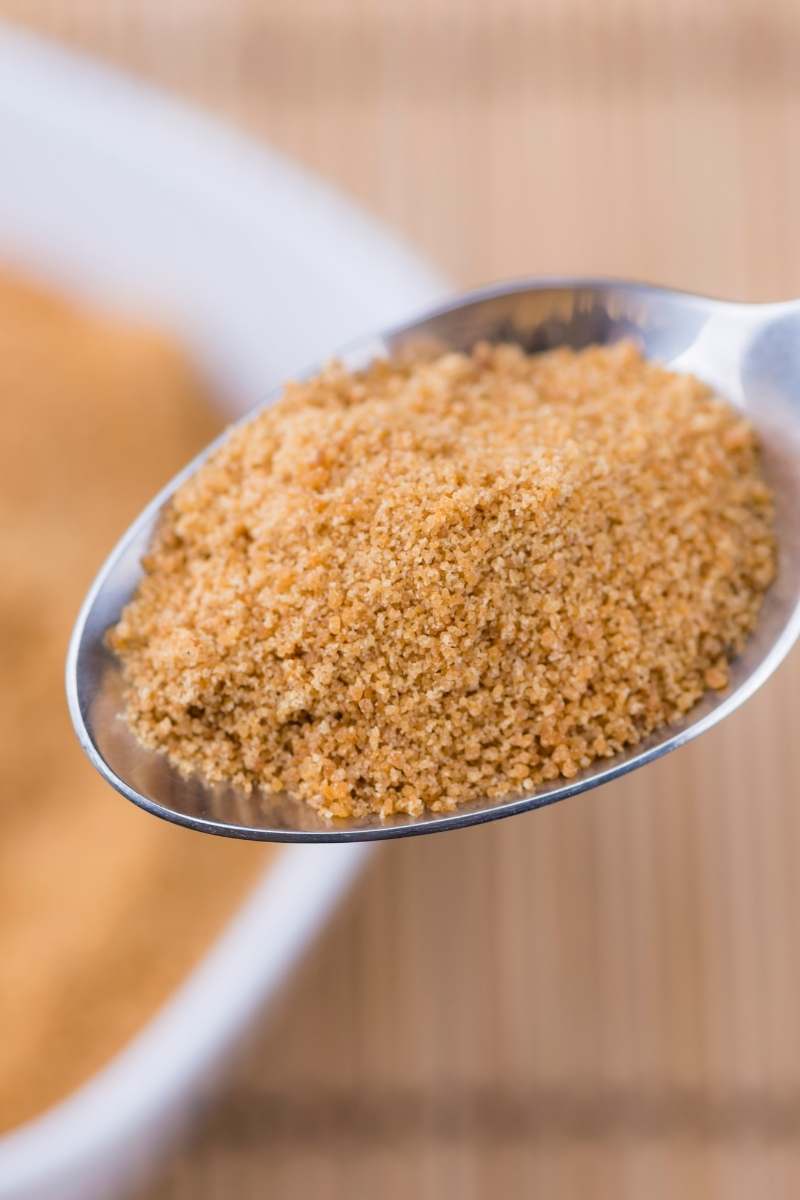
4. Coconut Sugar
Coconut sugar, also known as coconut palm sugar or coco sap sugar, or coconut crystals is made from the sweet nectar of flower buds of the coconut palm.
The coconut nectar is heated until the water evaporates and then the caramelized nectar is dried and ground into granules. Coconut sugar contains small amounts of minerals like potassium and iron. It has about the same calories and carbohydrates as regular sugar, so I treat it just like sugar.
Ideas to Use Coconut Sugar
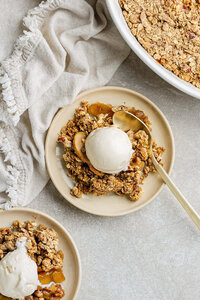
- Mixed into healthy apple crisp topping
- In place of white sugar in baked goods (it’s more grainy than white sugar, so use wisely)
- Replace white sugar in hot drinks and use coconut sugar instead while you’re weaning off of sugar in your drinks (the goal is to get to no sugar in your drinks if possible)
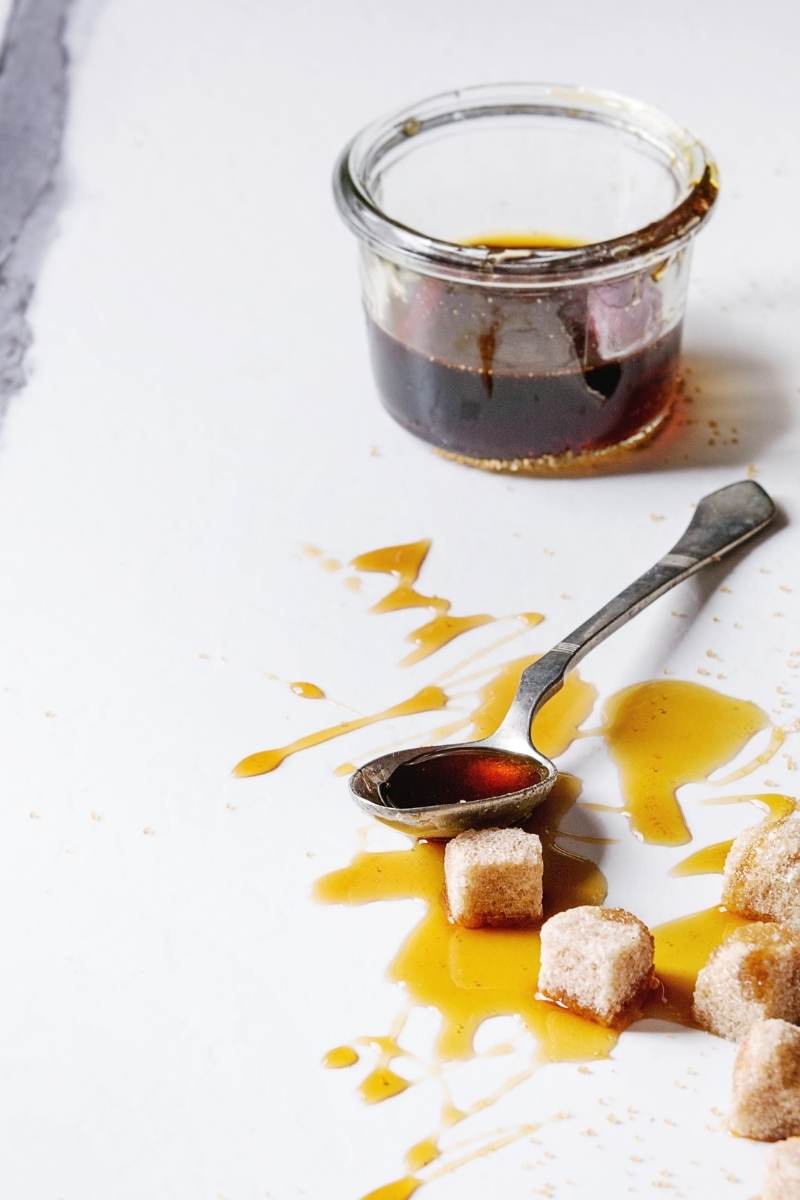
5. Blackstrap Molasses
Organic molasses is one of the most nutritious sweeteners derived from sugar cane or sugar beet. It’s what’s left after the juice is boiled down and the sugar crystals are pulled out.
The longer the juice is boiled, the less sweet, more nutritious, and darker the product is. Molasses imparts a very distinct flavor to food. Blackstrap molasses is a good source of iron, calcium, magnesium, and potassium. It has a distinct taste, so use it specifically when a recipe calls for it.
All of the natural sweeteners on the list above are easily accessible in most grocery stores. I like to recommend things that are easily accessible to most of my readers. There are thousands of types of plants on the planet and smart people have figured out how to extract natural sweetness from many of them.
Here are a few less common natural sweeteners to try if you can find them in your local stores (or online) and want to experiment:
- brown rice syrup
- birch syrup
- yacon syrup
- lucuma powder
Natural Sweeteners to Avoid
Questionable: Stevia
Stevia is a leafy herb and has been used for centuries by native South Americans. The extract from stevia is approximately 200 to 400 times sweeter than white sugar, according to the FDA, and can be used in cooking and baking, however, I think it’s used best as a sweetener in most beverages. However, the World Health Organization advises against using non-sugar sweeteners, stevia included, for weight control.
Since science isn’t clear on stevia, I agree that it should only be used in moderation if you like it. A few drops in beverages is enough to add a little sweetness but probably not enough to cause harm. Stevia is available in a powder or liquid form; I prefer the liquid form the best as some people think the powdered form is bitter. Sweetleaf is my favorite brand of the liquid version.
Not Healthy: Agave Nectar
You’ll notice that agave nectar did not make the list.
Agave nectar (aka agave syrup) is touted as a natural liquid sweetener made from the juice of the agave plant. Technically that is correct, however, the process to extract it from the plant makes it extremely processed, similar to the process of how white sugar is made. Agave nectars are sold in light, amber, dark, and raw varieties. However, agave is high in fructose and has been under much scrutiny due to possible manufacturing processes which are similar to that of high fructose corn syrup. Some research suggests that fructose affects the hormone leptin, which helps control your appetite and satiety, so I think it’s best to consume agave nectar in moderation, if at all. I used to use it occasionally but haven’t used it in a long while.
I’m a certified health coach, not a doctor, so please talk with your own doctor about any medical questions.
I’d love to hear from you! How do you incorporate these natural sweeteners into your eating plans? What’s your favorite way to use them?











Thank you, this article was very helpful. Packed full of information and facts. Appreciatively.
Stevia is one of my favorite sweeteners there are so many benefits of stevia. your article is really helpful for me its show so many benifit of stevia. thanks for your article keep sharing this type of article for us.
About Agave. Almost all brands actually add roughly 35g of refined sugar. hard to believe
I would just add this comment at to using honey to help your local allergies. This is actually not true. The reason being is that bees pollinate stuff that is not pollinated by the wind. Hence, almost no one is allergic to the plants and flowers bees pollinate. Humans are typically allergic to things like trees, grasses, molds and weeds. These are the things in the air which are pollinated by wind. Although honey has many other benefits it is not helpful for allergies.
IWhat is your stance on monk fruit as a natural sweetner?
Hello!
What would ratios be to sub a liquid sweetener such as honey or maple syrup for brown or white sugar? Thank you!
What is the ratio to sugar? Do I need to add/subtract anything to make the texture work out?
So we are okay to eat as much natural sugar (from fruit and veggies) as long as we stay away from added sugar in processed food? I’m a marathon runner and always thought natural sugar was good since we burn through so much of it running. Thank you! Megan
Im a bit confused as to the best form of stevia to buy…just bought stevia tabs (by naturals – the makers of equal) Just read ingreds – lactose, steviol glycosides, natural flavours, stabilisers. Are these ok to have or do you have to get more pure form?
What about Rice malt syrup?
I believe Rice Malt Syrup is the same as what’s called Brown Rice Syrup and is listed above 🙂
Thanks Elizabeth, this is a great overview! I also used to use agave, but have since stopped and have been experimenting with a lot of the others you mention above. I wish it was easier to get pure maple syrup in South Africa!
Yes, the world is a big place! I hope you find some good ones over there.
Elizabeth, what about raw agave? Is it just as bad? Also, date sugar?
There’s actually no such thing as “raw” agave because it has to be heated to be extracted from the plant. But, all agave is the same when it comes to it’s chemical makeup. So, still as above. Date sugar is concentrated fruit sugar (just like all dried fruit) so small amounts in moderation.