


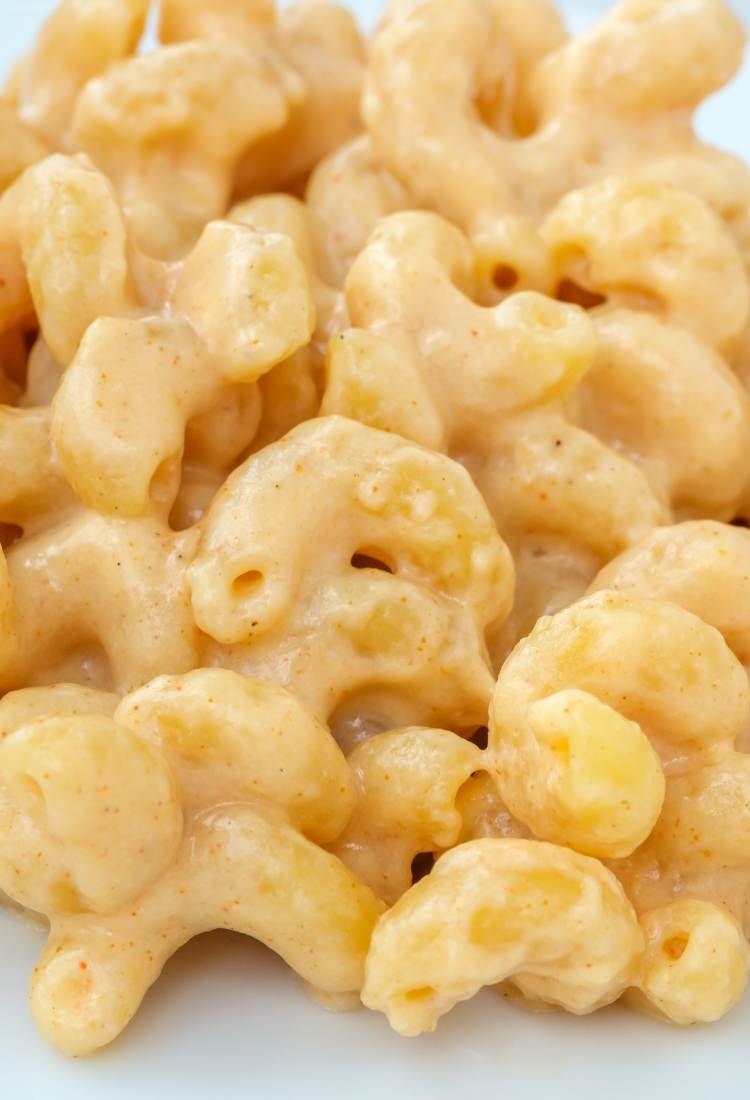
This one-pot mac and cheese is creamy, comforting, and ready in 15 minutes!
It’s the mac and cheese my mom used to make, and it’s currently going viral over on my Instagram (video below!). It’s the recipe to make when you want a quick mac and cheese but don’t want to use a recipe.
You put dry noodles in a pot, cover them with milk, and cook them right in it. The starch from the pasta thickens the milk into sauce, so there’s no roux, no béchamel, and nothing to drain. Creamy mac and cheese in about 15 minutes, and you never have to measure a thing.
I’ve made this hundreds of times over the past few decades (elder millennial here!), and I’ve stopped reaching for measuring cups entirely. I just look at the pot.
Why You’ll Love This One-Pot Mac and Cheese
- The noodles cook directly in the milk, so the starch they release becomes the sauce. That’s the whole trick, and it’s why you don’t need a roux.
- One pot, one spoon, no colander. Nothing gets drained and nothing gets dirty.
- Two slices of American cheese do the job that a béchamel or a cup of heavy cream usually does, which is keep the sauce smooth instead of letting it seize into a rubbery block as it cools. Read the schience of why below.
- It works with whatever noodles are open in your pantry, so it’s the answer to a half-empty box of shells and the last of the milk.
- Start to finish it’s about 15 minutes, which is faster than the boxed stuff plus a side.
This One Is Meant to Be Made Without Measuring
I wrote amounts into the recipe card below because you need a starting point, but treat them as exactly that. This is an off-the-cuff mac and cheese. The ratio you’re actually going for is visual: noodles in the pot, milk poured over until they’re covered, and enough cheese that it tastes like cheese. If you have 10 ounces of pasta instead of 8, use more milk. If your cheese drawer has half a block of cheddar and a corner of gruyère, use both.
The method is forgiving in a way most mac and cheese recipes aren’t, because there’s no sauce to break and no ratio of fat to flour to get wrong. Make it once by the numbers. After that, you’ll eyeball it.
Ingredients
Here’s what you’ll need:
- Dry pasta (any shape you have)
- Milk (whatever’s in your fridge)
- Sea salt and freshly ground black pepper
- Sharp cheddar, grated from a block
- American cheese (optional, but it earns its place, read the note below)
- Butter
- Hot sauce (optional)
Seven things, most of which are already in your kitchen.
One-Pot Mac and Cheese Ingredient Notes
Cheddar
Grate your own. I use Beecher’s flagship cheddar because I live in Seattle and it’s worth it, but any good block of sharp cheddar works. Pre-shredded cheese is coated in anti-caking ingredients so it doesn’t clump in the bag, and that same coating is why it melts poorly and goes grainy in a sauce. Grating a block takes two minutes. If you know, you know. It’s also doing real nutritional work: an ounce of cheddar has about 7 grams of protein and 200 milligrams of calcium.
American Cheese
2 slices does the trick.
I know this surprises people. American cheese is optional, but it’s in here for a reason: it contains emulsifying salts, which hold the fat and the liquid together in a smooth sauce.
Most creamy mac and cheese recipes get that effect by making a béchamel or pouring in heavy cream. Two slices of American cheese do it in about ten seconds with no extra pot. Without it, shredded cheddar tends to tighten into a solid mass as it cools. Two slices is not enough to taste; it’s just enough to work.
READ THIS BEFORE YOU FREAK OUT ABOUT AMERICAN CHEESE HERE: The American cheese is optional, but it helps emulsify the sauce so the shredded cheese doesn’t solidify into a rock as it cools. Other methods include making a béchamel sauce or using heavy cream—in this case, American cheese is the answer. It contains emulsifying salts that help the cheese and liquid stay emulsified instead of separating. It’s definitely not a health food, but a slice or two every now and then isn’t something I’m worried about. Here, it’s simply food science for a better result. Again, it’s optional! I know it’s strange to say “use 2 slices of American cheese but grate your own cheddar.” But it’s food science. Both yield a creamier sauce.
Milk
Any milk you have is fine. I used 2%. Whole milk makes it richer, skim makes it thinner. The one thing to know is that milk scorches on the bottom of a pan much faster than water does, which is the whole reason this recipe asks you to stir.
To save on groceries, I buy all of my pantry staples, including pasta, oils, beans, and more, on Thrive Market, a high-quality online grocer. Get 40% off your first order at Thrive Market here.
Hot Sauce
Not for heat. A few dashes of Frank’s or Cholula add a little acid, and that acid sharpens the cheddar and keeps the pot from tasting flat and heavy. Nobody will guess it’s in there. If you don’t have hot sauce, a small splash of Dijon does something similar.
Video
How to Make One-Pot Mac and Cheese
Here’s how it goes, and what to watch for at each step:
- Add your dry pasta to a medium pot and pour milk over it until the noodles are covered. Don’t measure. Just look at the pot. Season with salt and pepper now so the noodles absorb it while they cook rather than sitting in seasoned sauce at the end.
- Cook over medium to medium-low heat for 10 to 12 minutes, stirring frequently. (Some shapes take closer to 15.) Stirring is a big part of this recipe. It pulls starch out of the noodles, which is what turns the milk into sauce, and it keeps the bottom from scorching. You want the milk warm enough to cook the pasta but never at a hard boil, because milk boils over fast.
- Check for sauce when the noodles hit al dente. There should be a little loose, starchy sauce pooling in the bottom of the pan. If there isn’t, add another quarter cup of milk and keep stirring.
- Turn the heat to low and stir in the American cheese, butter, and hot sauce first. Let the butter melt completely. This gives you an emulsified base, so the cheddar has something to melt into instead of seizing.
- Add the shredded cheddar and keep stirring until it’s smooth. Low heat the whole time. Cheddar added to a ripping hot pan is how you get a grainy, oily sauce.
- Loosen it if you need to. Splash in more milk a little at a time until it’s the consistency you want. Taste, add more salt if it needs it, and serve right away. It’s at its best about thirty seconds after it comes off the heat.
One honest warning: don’t walk away from the pot the first time you make this. Milk can go from fine to over the edge of the pan quickly. Once you’ve done it once you’ll know exactly what it looks like and it becomes genuinely easy.
See the full recipe and tips in the printable recipe card below.
Variations and What to Serve With It
- Swap gruyère, fontina, or smoked gouda in for part of the cheddar. Keep the American cheese either way.
- Stir in a spoonful of Dijon, a pinch of smoked paprika, or a grating of nutmeg at the end.
- Add cooked bacon, shredded rotisserie chicken, or a big handful of baby spinach wilted in at the end.
- Serve it with something sharp and green to cut the richness. A simple arugula salad with lemon is my default.
If you like this kind of one-pot cooking, my creamy 1-pot orzo works on the same principle, and my caramelized onion pantry pasta is the other thing I make when the fridge is nearly empty. Both are in my collection of 30-minute dinners.
How to Store One-Pot Mac and Cheese
Store leftovers in an airtight container in the fridge for up to 3 days. Reheat on the stovetop over low heat with a splash of milk, stirring until the sauce comes back together. The microwave works too, just stir halfway through and add a little milk. I don’t recommend freezing it, because the sauce separates when it thaws.
Print
Stovetop Mac & Cheese (1 Pot)
- Prep Time: 15 minutes
- Total Time: 15 minutes
- Yield: 4 servings
- Category: Lunch
Description
This one-pot creamy mac and cheese is meant to be made without measuring. You cover your noodles with milk, cook them right in it, and stir in the cheese at the end, so there’s no draining, no roux, and no measuring cups on the counter. I’ve written down what I used so you have a starting point, but once you make it once you’ll just eyeball it.
Ingredients
- 8 ounces dry pasta (any shape you have)
- About 2 1/2 cups milk, enough to cover the noodles by about an inch (I used 2%, but any milk works)
- 1/2 teaspoon sea salt, plus more to taste
- 1/4 teaspoon freshly ground black pepper
- 2 cups shredded sharp cheddar, grated from a block (about 8 ounces)
- 2 slices American cheese
- 2 tablespoons butter
- A few dashes hot sauce, optional (I use Frank’s or Cholula)
Instructions
- Add the dry pasta to a medium pot and pour in enough milk to cover it by about an inch. You don’t need to measure. Just look at the pot. Add salt and pepper.
- Cook over medium heat for 10 to 12 minutes, stirring frequently. Stirring is a big part of the recipe here. It pulls the starch out of the noodles, which is what turns the milk into sauce, and it keeps the bottom from scorching. Once the noodles are cooked al dente, there should be a little sauce from the milk and starch in the bottom of the pan. If there isn’t, add another 1/4 cup milk.
- Turn the heat to low and stir in the American cheese, the butter, and the hot sauce. Once the butter is melted, stir in the shredded cheddar. Keep stirring until everything melts into a smooth sauce.
- If the sauce is tighter than you want, splash in more milk a little at a time until it loosens up. Taste, add more salt if it needs it, and serve right away.
Notes
Skip the pre-shredded cheese. Bagged shredded cheese is coated in starch and cellulose to keep it from clumping in the bag, and that coating is exactly what makes a cheese sauce turn grainy. Grating a block takes two minutes and it’s the difference between creamy and gritty.
The two slices of American cheese aren’t a joke. American cheese has emulsifying salts in it, which keep the sauce smooth and, more importantly, keep it smooth the next day. Mac and cheese made without it tends to break and get oily when you reheat it. Two slices is enough that you won’t taste them.
The hot sauce isn’t for heat. A few dashes add vinegar, and that little bit of acid sharpens the cheddar and keeps the whole pot from tasting flat and heavy. Nobody will guess it’s in there.
Any noodles work. Elbows, shells, rotini, whatever’s open in your pantry. If you’re using gluten-free pasta, keep extra milk nearby. It tends to drink up more liquid and thicken faster.
Don’t walk away from the pot. Milk scorches on the bottom of a pan much faster than water does. Medium heat and frequent stirring, and you’ll be fine.
Storage and reheating: Store leftovers in an airtight container in the fridge for up to 3 days. Reheat on the stovetop over low heat with a splash of milk, stirring until it comes back together. The microwave works too, just stir halfway through and add milk. I don’t recommend freezing it. The sauce separates when it thaws.
One-Pot Mac and Cheese FAQs
Can you really cook pasta in milk?
Yes. Pasta cooks in any hot liquid, and milk works just as well as water. The difference is that milk scorches faster and can boil over, so you need medium to medium-low heat and frequent stirring. The payoff is that the starch stays in the pot instead of going down the drain, and that starch is what thickens the milk into sauce.
Why is my mac and cheese grainy?
Two usual culprits. The first is pre-shredded cheese, which is coated with anti-caking ingredients that don’t melt cleanly. The second is heat that’s too high when the cheese goes in. Turn the burner to low before you add cheddar, and grate it yourself from a block.
Do I have to use American cheese?
No, but it’s the easiest way to get a sauce that stays smooth. The emulsifying salts in American cheese keep the fat and liquid together, which is the same job a béchamel or heavy cream does in other recipes. Skip it if you want, just know the sauce is more likely to tighten up as it cools.
How much milk do I need?
Enough to cover the noodles in the pot, roughly 2 1/2 cups for 8 ounces of pasta. You’ll often need a splash more toward the end as the noodles absorb it. This is exactly the kind of thing you should eyeball rather than measure.
What pasta shape works best?
Anything with ridges or curves catches sauce well, so shells, elbows, cavatappi, and rotini are all great. Long noodles like spaghetti work but need more stirring to keep from clumping. Gluten-free pasta works too, just keep extra milk nearby because it tends to absorb more liquid.











Leave A Review + Read The Comments →