


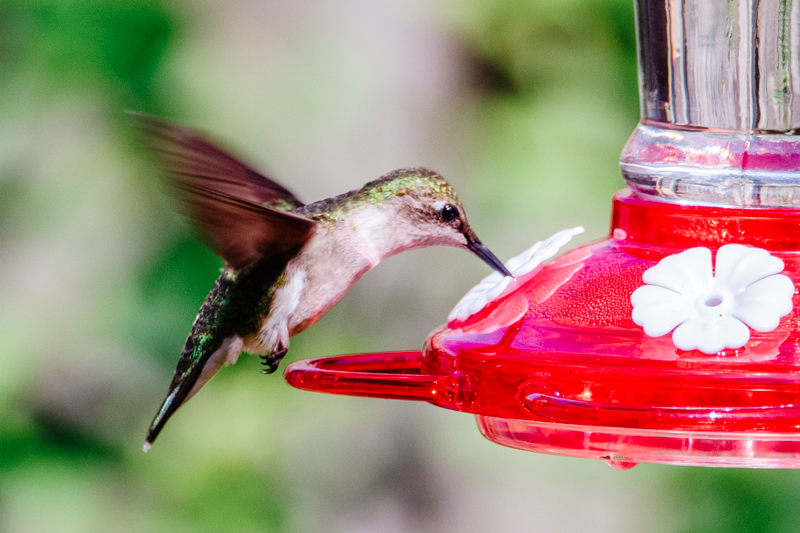
We recently added a hummingbird feeder to our back patio and love it! If you’ve been thinking about getting one, I highly recommend it. And here’s the trick: skip the overpriced store-bought nectar and make your own hummingbird food at home for pennies.
When we bought our first feeder, I grabbed a liter of “hummingbird food” for ten bucks at the checkout line. Later, I looked at the label—just sugar and water. My husband (who has great cocktail-making skills) tasted it and said, “Yep, that’s just simple syrup.”
Whoops. Lesson learned. There’s absolutely no reason to spend $10 on hummingbird food (aka hummingbird nectar) when you can make the exact same thing for around 25 cents. That’s almost a 98% savings!
The Best Homemade Hummingbird Food Recipe
To make safe hummingbird nectar, combine 1 cup sugar with 4 cups water. Stir until dissolved. Let it cool to room temperature before filling your feeder.
That’s it. One part sugar to four parts water is the standard nectar ratio recommended by bird experts. And if you know my healthy recipes, I hardly ever use white sugar. However, you need it to make the safest DIY hummingbird food, as noted by The Smithsonian’s National Zoo & Conservation Biology Institute (1).
Tip: In colder weather or during spring migration (April is prime time), you can use 1 part sugar to 3 parts water for a little extra energy boost.
Printable recipe + FAQs below!
Print
Hummingbird Nectar (1:4 Safe Ratio, No Red Dye)
- Prep Time: 5 minutes
- Cook Time: 5 minutes
- Total Time: 10 minutes
- Yield: 4 cups
- Category: DIY
- Method: Boil
Description
Make safe, dye-free hummingbird nectar at home with just sugar and water. The standard nectar ratio is 1 part sugar to 4 parts water, which mimics natural flower nectar and keeps these beautiful little birds healthy.
Ingredients
- 1 cup refined white cane sugar (pure white sugar only)
- 4 cups water (spring or tap is fine)
Cold weather / early spring option: Optionally use 1 cup sugar + 3 cups water (1:3) for a short period during cold snaps or early migration, then return to 1:4.
Instructions
- Heat the water in a saucepan until steaming or just boiling.
- Stir in the sugar until fully dissolved; do not caramelize.
- Cool to room temperature.
- Fill a clean feeder with only what you’ll use in a few days.
- Refrigerate leftovers in a lidded glass jar for up to 2 weeks.
Notes
- Never add: red dye/red coloring, honey, agave syrup, beet or brown sugar, molasses, powdered sugar (cornstarch), or artificial sweeteners.
- Cleaning: Rinse feeders with hot soapy water before each refill. Every few refills, sanitize with 1 part vinegar to 4 parts water; rinse well. Avoid bleach unless you can rinse extremely thoroughly; don’t use the dishwasher.
- Change frequency: In hot or dry weather, replace nectar every 2–3 days; in cooler weather every 5–7 days. Discard if cloudy, fermented, or moldy.
- Batches: For larger batches, dissolve sugar in hot water in a clean bucket, then funnel into jars; zip a date label on the lid and refrigerate.
- Feeder tips: Choose a feeder with bright red parts (no dye in the nectar) that’s easy to take apart and scrub. Place near native flowering plants like bee balm and trumpet honeysuckle for a natural buffet; hummingbirds also get protein from insects and spiders.
- Regional/seasonal: In April and other early-bloom months—or during migration—nectar provides additional sustenance until flowers bloom. In cold weather, use the short-term 1:3 ratio above.
Why This Hummingbird Nectar Is Safe
This simple sugar-water mixture mimics the sweetness of natural flower nectar and gives hummingbirds a safe, easy energy source. It won’t make them “addicted”—they’ll still feed on insects, pollen, and native flowering plants like bee balm or trumpet honeysuckle. Think of your feeder as an additional sweet treat and a reliable stopover during migration.
And yes, it really is safe—as long as you follow a few important rules.
What NOT to Add to Hummingbird Food
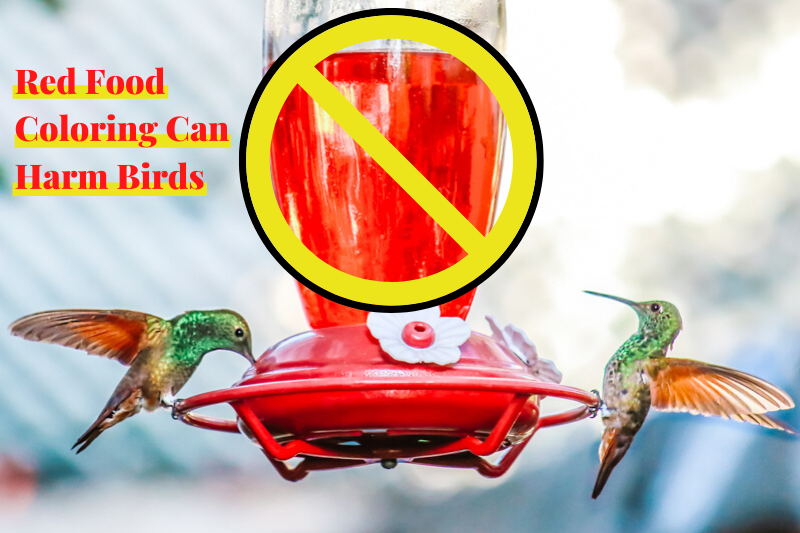
- No red dye or red coloring
Years ago, people added food coloring to make nectar look like a flower. Don’t. Red dye and chemicals can harm hummingbirds. Instead, choose the best hummingbird feeder with bright red parts—no dye required. - Use only refined white sugar
Skip honey, organic sugar, turbinado, beet sugar, agave syrup, or artificial sweeteners. Even small amounts of molasses or cornstarch (found in powdered sugar) can make hummingbirds sick. The only safe choice is refined white cane sugar or pure white cane sugar. - Avoid additional ingredients
Don’t add protein powder, “extra sustenance,” or other additives. Hummingbirds already get protein from insects, spiders, and pollen.
Cleaning & Care Tips
- Small batches: Make a lot of nectar at once if you like (I’ll mix a gallon in a clean bucket and store jars in the fridge). Use within two weeks.
- Change often: In hot or dry weather, replace sugar water every 2–3 days. In cooler weather, you can go up to 5–7 days.
- Clean feeders regularly: Wash with hot soapy water before each refill. Every few weeks, sanitize with 1 part vinegar to 4 parts water. Avoid bleach unless you rinse extremely well, and never put feeders in the dishwasher.
- Watch for mold: If you see cloudy water, greyish mold, or black spots, toss the nectar, scrub the feeder, and start fresh.
A well-tended sugar water mixture will keep your feeders safe and the birds coming back.
Seasonal Notes
- Spring (April & May): Nectar is especially important when natural blooms are just starting and birds are migrating north.
- Cold weather: A slightly stronger 1:3 ratio can help hummingbirds maintain energy.
- Dry weather: Change food more often to prevent fermentation.
- Migration season: Feeders provide reliable fuel when natural nectar sources are scarce.
Why I Love This Recipe
If you’ve followed me for a while, you know my grandmother adored hummingbirds. She even had one etched into her glasses lens. To this day, when one zips by, my sisters and I smile and say, “There’s Grandma Helen saying hi.”
These beautiful little birds feel like family, and keeping a clean feeder with safe nectar feels like the best way to honor her memory.
FAQ: Hummingbird Nectar & Feeder Care
What is the best sugar-to-water ratio for hummingbird food?
The standard hummingbird nectar ratio is 1 part sugar to 4 parts water (for example, 1 cup sugar to 4 cups water). In early spring or cold weather, you can temporarily use 1 part sugar to 3 parts water to give hummingbirds a little extra energy.
Can I use honey, agave, or artificial sweeteners instead of sugar?
No. Only use refined white cane sugar (pure white sugar). Honey, agave syrup, beet sugar, brown sugar, or artificial sweeteners can ferment, grow bacteria, or contain compounds that harm hummingbirds.
Is red dye safe in hummingbird food?
No. Adding red dye or red coloring is unnecessary and can be harmful. Instead, choose a feeder with bright red parts — that color is enough to attract hummingbirds without adding chemicals to their food.
How often should I change the nectar?
In hot or dry weather, change the sugar water every 2–3 days. In cooler weather, you can go up to 5–7 days. If the nectar looks cloudy, fermented, or moldy, throw it out immediately and clean the feeder before refilling.
How do I clean a hummingbird feeder?
Rinse with hot soapy water before each refill. Every few refills, sanitize with a mix of 1 part vinegar to 4 parts water. Avoid bleach unless you rinse extremely well, and don’t run feeders through the dishwasher.
Do hummingbirds rely only on sugar water?
No. Hummingbirds also feed on insects, spiders, and pollen from native plants like bee balm and trumpet honeysuckle. Your feeder provides an additional source of nectar and reliable energy during migration or when blooms are scarce.
What’s the best type of hummingbird feeder?
Look for a feeder that has bright red color, easy-to-clean parts, and no tiny crevices where mold can hide. A well-tended feeder is one of the best sources of nectar you can provide, especially when flowers aren’t blooming.
Fun Facts About Hummingbirds
- There are over 300 species of hummingbirds.
- They need both nectar and protein from insects to thrive.
- Their wings beat so fast they make an audible “hum”—hence their name.
- They burn so much energy that a feeder with sugar water can literally keep them alive during migration.
Bottom line: Stick to the simple 1:4 sugar-water ratio, skip the red dye, and clean your feeder often. Your hummingbirds will stay healthy, your feeder will stay fresh, and you’ll enjoy the magic of these glittery little visitors all season long.
More Easy Recipes You Might Enjoy
Now that the hummingbirds are taken care of, check out other top recipes on my site that will keep you healthy, too!








This hummingbird food recipe with sugar water is simple and works great!.
that is the only safe recipe and i stopped added red food coloring long ago….I keep my feeders in the shade as hanging in the hot sun heats the water up so hot they can’t drink it.
I live in Seattle, too. I’ve never had a mold problem. The recipe couldn’t be easier. Thank you, and hats off to your Grandmother.
Thanks! 🙂 ~E
My. Name. Is. Tammy. Weiland
I. Was. Wondering. If. They
Can. Have. Flavoer. Splashy
In. Ther.e. Humming. Bird
Feeder. Thanks. Tammy
Weiland
No, do not add any flavors or anything besides the sugar/water mixture as written above.
Why do you need to say it’s safe for birds in the title.. surely the fact you’re suggesting it in the first place means it’s okay. Do you make recipes that aren’t okay to ingest?
Some store-bought hummingbird foods are not safe for birds because they have food coloring, but stores still sell them. And, some people don’t boil the water, which can create an environment that grows bacteria. That’s why it says “won’t harm birds.”
Question. Other than making it easier to dissolve, why boil the water? I’m able to mix it with cold water. Please respond to my email. I don’t get out here much. Thank you in advance!
Boiling the water is a good idea just to sterilize and neutralize any impurities.
Let it cool in the freezer and take out at room temp.
Boil to remove impurities from the sugar and water as well is why we boil it safer that way never use cold
Also because the impurities from the water and sugar can harm the hummingbird if you don’t boil it wich is why I always would suggest boiling it and also maybe using filtered water but tap is ok as long as you boil to take the impurities out that’s all have a great one guys
I haven’t tried the recipe yet, but these birds are magical to me too. I can help myself fall asleep by imagining the rapid fluttering sound in my ear. My friend, who is a spiritual guide, helped me conjure up that image during a meditation. I love your Grandma story. We share a similar “hello” to my mother in law when we see a butterfly, her favorite totem. Thanks!