Description
Make safe, dye-free hummingbird nectar at home with just sugar and water. The standard nectar ratio is 1 part sugar to 4 parts water, which mimics natural flower nectar and keeps these beautiful little birds healthy.
Ingredients
Units
- 1 cup refined white cane sugar (pure white sugar only)
- 4 cups water (spring or tap is fine)
Cold weather / early spring option: Optionally use 1 cup sugar + 3 cups water (1:3) for a short period during cold snaps or early migration, then return to 1:4.
Instructions
- Heat the water in a saucepan until steaming or just boiling.
- Stir in the sugar until fully dissolved; do not caramelize.
- Cool to room temperature.
- Fill a clean feeder with only what you’ll use in a few days.
- Refrigerate leftovers in a lidded glass jar for up to 2 weeks.
Notes
- Never add: red dye/red coloring, honey, agave syrup, beet or brown sugar, molasses, powdered sugar (cornstarch), or artificial sweeteners.
- Cleaning: Rinse feeders with hot soapy water before each refill. Every few refills, sanitize with 1 part vinegar to 4 parts water; rinse well. Avoid bleach unless you can rinse extremely thoroughly; don’t use the dishwasher.
- Change frequency: In hot or dry weather, replace nectar every 2–3 days; in cooler weather every 5–7 days. Discard if cloudy, fermented, or moldy.
- Batches: For larger batches, dissolve sugar in hot water in a clean bucket, then funnel into jars; zip a date label on the lid and refrigerate.
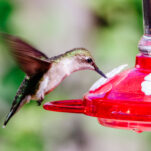
- Feeder tips: Choose a feeder with bright red parts (no dye in the nectar) that’s easy to take apart and scrub. Place near native flowering plants like bee balm and trumpet honeysuckle for a natural buffet; hummingbirds also get protein from insects and spiders.
- Regional/seasonal: In April and other early-bloom months—or during migration—nectar provides additional sustenance until flowers bloom. In cold weather, use the short-term 1:3 ratio above.