Description
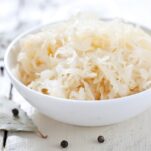
This 2-ingredient sauerkraut recipe is one of our favorites. Not only is homemade sauerkraut delicious, but it’s also healthy and saves you money too. Feel free to add 1/2 teaspoon of caraway seeds to the cabbage mix to add a traditional flavor to your sauerkraut. Enjoy!
Ingredients
- 1 medium green or red cabbage (about 2 pounds)
- 1 1/2 tablespoons sea salt (I use Real Salt)
- Optional for flavor: 1/2 teaspoon caraway seeds
Instructions
-
Prepare the Cabbage:
- Remove the outer leaves of the cabbage and discard. Remove one more and set one leaf aside for later use.
- Cut the cabbage into quarters and remove the core.
- Thinly slice the cabbage using a sharp knife or mandoline. The thinner the slices, the quicker the fermentation process. If you prefer the shredded texture, you can also shred the cabbage on a box grater.
-
Salting the Cabbage:
- Place the sliced cabbage in a large mixing bowl.
- Sprinkle the salt over the cabbage.
- Using clean hands, massage the salt into the cabbage. This helps to draw out the water from the cabbage (it creates it’s own brine) and starts the fermentation process. Massage for about 5-10 minutes until the cabbage is wilted and releases a significant amount of liquid.
-
Packing the Cabbage:
- Transfer the salted cabbage and its liquid into a clean jar or fermentation crock. I use a mason jar
- Press the cabbage down firmly using your fist or a tamper to remove air pockets and to ensure the cabbage is submerged in its own brine.
- Place the reserved cabbage leaf over the top to help keep the shredded cabbage submerged. This is optional but I find it helpful.
-
Weighing Down the Cabbage:
- Use a fermentation weight (or a small, clean container filled with water or something heavy) to weigh down the cabbage, keeping it submerged under the brine. Air in the cabbage can cause mold, so it’s important that it’s completely submerged in its brine.
- Cover the jar with a clean cloth or a lid set loosely on top to allow gases to escape during fermentation. Or, use a jar lid designed to release air.
-
Fermentation:
- Store the jar at room temperature, away from direct sunlight, for 1 to 4 weeks. The ideal temperature is around 65-75°F (18-24°C).
- Check the sauerkraut daily to ensure the cabbage remains submerged. If needed, press it down again to release more liquid.
- Taste the sauerkraut after the first week. When it reaches your desired level of tanginess, it’s ready.
-
Storing:
- Once the sauerkraut is ready, remove the weight and the top cabbage leaf.
- Transfer the sauerkraut to smaller jars, if desired, and store it in the refrigerator covered with a lid. Properly stored, it can last for several months.
Notes
- Ensure all equipment is very clean to prevent unwanted bacteria from interfering with the fermentation process. I generally pour boiling water over everything to make sure there’s no unwanted bacteria.
- Some people say if you see any scum or mold on the surface, simply skim it off and the sauerkraut beneath should be fine as long as it remains submerged in brine. I prefer to throw it away and start over if I see mold (I’ve only had to do that once!).
- Experiment with adding different spices or other vegetables like carrots or beets for variety.